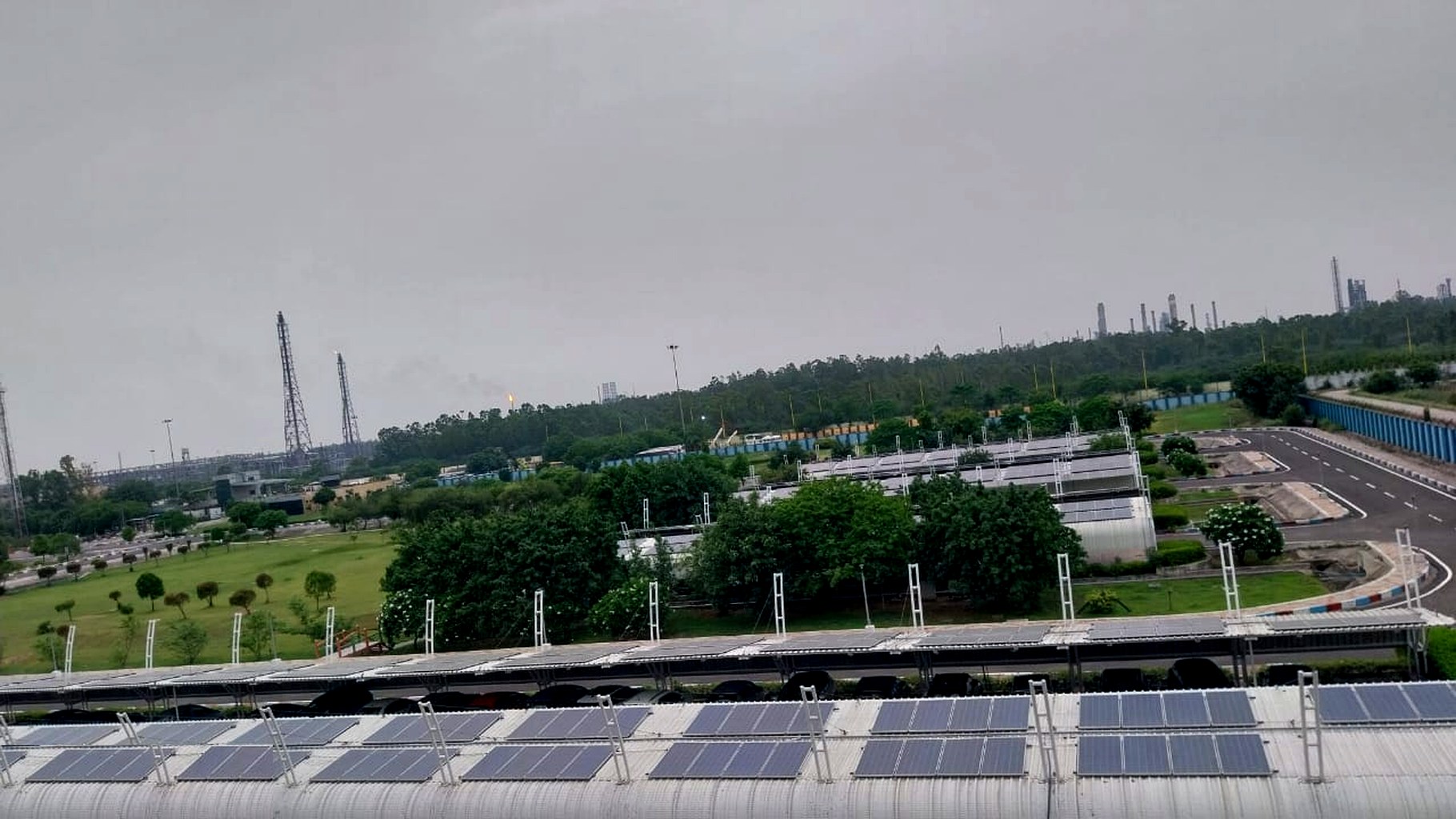
Greater Noida is one of India's densest commercial and industrial belts. Surajpur, Kasna, the Ecotech estates, Udyog Vihar, Udyog Kendra and the UPSIDC Sites between them house thousands of factories, cold storages, hospitals, warehouses and institutions. Two things have changed in 2026 that make solar the default question rather than an optional one.
First, the Greater Noida Solar Mandate 2026 now makes rooftop solar a Completion Certificate condition for new educational and institutional buildings and for group housing projects (which must meet 5–10% of connected load through renewables). Knowledge Park institutions and new commercial complexes are no longer choosing whether to install solar - they are choosing who to install it with. Second, NPCL - the licensed distributor for Greater Noida - has periodic tariff revisions that, taken together with rising demand charges and a long asset life, make solar an attractive hedge against grid-side cost inflation. The exact per-unit applicable tariff varies by consumer category, capacity slab, time-of-day and any approved fuel-cost adjustments - your most recent NPCL bill is the reliable reference, not a number on a website.
Note on figures in this guide: All pricing ranges, payback periods, IRR estimates and savings illustrations in this article are indicative only, drawn from 2026 industry benchmarks. Actual numbers for your facility will depend on equipment selection, site conditions, mounting type, electrical complexity, prevailing module and inverter prices at the time of order, applicable taxes and duties, financing structure, and DISCOM-specific commercial conditions. Tariffs are subject to periodic regulatory revisions. Final pricing, payback and IRR are shared after a free site survey and engineering proposal, and any commercial offer is governed by a separate written agreement.
This guide is written for the people who actually sign the purchase order: plant heads, facility managers, CFOs and procurement leads at C&I buyers in Greater Noida and the surrounding NCR belt. It walks through the five questions a serious commercial buyer should ask any solar EPC before issuing an LOI, and shows how Maxoptimus Green Energy Technology Pvt Ltd (MGetEnergy) - headquartered at J-26, Site V, Kasna Industrial Area - answers each of them.
The 5 Questions Every Greater Noida C&I Buyer Should Ask
Solar EPC is a long-tail business. PV module warranties run 25 years (linear performance). Inverter warranties run 5–10 years. Net-metering contracts run for two decades. The right partner is on-site within 24 hours of an alarm in year five and is still picking up the phone in year fifteen. Walk every prospective EPC through these five tests before you sign anything.
Question 1 - Is the EPC actually local to Greater Noida?
"Pan-India presence" reads well on a brochure. It is much less useful on the day a string-fault alarm goes off in Ecotech III at 11 a.m. on a working Saturday. For a commercial or industrial buyer in Greater Noida, the right EPC should be physically based in the same belt and have direct working relationships with the local DISCOMs.
The DISCOM map for industrial Greater Noida is split. Most industrial connections in Greater Noida and Greater Noida West sit under NPCL - Noida Power Company Limited, established in 1993 as a joint venture between the RP-Sanjiv Goenka Group and GNIDA, serving 1.4 million consumers across roughly 335 sq km. NPCL net-metering allows industrial buyers to install solar up to 100% of sanctioned load, with monthly carry-forward of excess export and end-of-year settlement at the notified tariff. Pockets of the wider service belt - Aligarh, Mathura, Bulandshahr - sit under PVVNL (Pashchimanchal Vidyut Vitran Nigam) and parts of east UP fall under UPPCL. Process timelines and documentation requirements differ across all three. An EPC that has filed dozens of NPCL applications already knows which line in the load-sanction certificate trips the meter-installation desk; an out-of-state EPC will learn it on your project, at your cost.
MGetEnergy's office at J-26, Site V, Kasna Industrial Area is inside the same belt where most of our customers operate. Same-day site visits to Surajpur Industrial Area, Kasna, Ecotech I, Ecotech II, Ecotech III, Udyog Vihar, Udyog Kendra and the UPSIDC Sites B / IV / C are routine. Knowledge Park I, II, III and V institutions are within a 20-minute drive - particularly relevant under the new institutional-building solar mandate. We have similar local presence across the wider NCR and North India belt - read our city-specific guides for Gurugram, Faridabad, Meerut, Agra, Panipat and Ajmer, and our state-level deep-dive on the solar revolution in Uttar Pradesh.
Question 2 - What does the EPC's track record look like in your industry?
Cold storages, hospitals, factories and poultry farms each have a load profile, a rooftop type and a downtime tolerance unique to them. A solar EPC that has only delivered residential rooftops will give you the wrong design. The credible test is simple: ask for verifiable references from your specific industry, with name, capacity, year and a phone number you can call.
Manufacturing units and industrial factories
Industrial tariffs in India sit on a wide band depending on consumer category, capacity slab, time-of-day, and demand-charge structure - and they revise periodically. A correctly sized rooftop offset of 30–60% on daytime production load typically pays back in 3–5 years for industrial buyers; in higher-tariff states the band can compress to 3–4 years. Your actual numbers depend on your specific tariff slab, sanctioned load and consumption profile. Our most relevant local reference is M/s Efab Power Pvt Ltd at Site V, UPSIDC, Kasna, Greater Noida - a 120 KW on-grid system commissioned in July 2019 inside the same UPSIDC belt where this guide is being read. The director, Mr Hemant Sheoraut, in his own words:
"In July 2019 MGetEnergy installed a 120 kW on-grid solar system at our industrial unit and it has been a game changer. Our energy costs have significantly decreased and the system has improved the efficiency and reliability of our operations. In 3 years 7 months we recovered the full investment. Till now we have had 100% uptime - great work by MGetEnergy."
Our wider NCR manufacturing portfolio includes international corporate names - among them Tecumseh's compressor manufacturing facility at Ballabgarh, Faridabad - and a 80 kW + 200 kWh hybrid system at M/s Shimnan Rugs (carpet manufacturing) in Bhadohi, UP. For a deeper view on commercial-scale rooftop economics, see our companion guides on solar panels for commercial use, C&I system sizing, and the 1 MW solar power plant cost guide. Our turnkey Solar EPC service covers everything from site survey to commissioning.
Cold storages and cold-chain operators
Cold storage is one of the cleanest natural fits for industrial solar. The load is daytime-heavy, runs through the year, and the customer cannot afford rooftop penetrations that compromise insulation. In August 2020 we commissioned a 240 KW on-grid solar system at Jeevani Devi Sheetgrah Cold Storage in Iglas, Aligarh. The director, Mr Arun Verma:
"MGetEnergy installed a 240 kW on-grid solar system at our cold storage facility in August 2020 and it has been a game changer. Not only has it reduced our energy costs, it has also increased the efficiency of our facility. Most importantly - no piercing or drilling on the rooftop. The system was installed in just 3 weeks and the remote monitoring capabilities are excellent."
Three weeks from PO to commissioning on a 240 KW industrial rooftop is fast - and the non-penetrative mounting is what made it work for the customer's insulation envelope.
Hospitals and healthcare facilities
Hospitals are zero-downtime environments. Solar PV by itself is not enough - what hospitals actually need is a hybrid architecture (solar + BESS + DG) that keeps OT, ICU, ventilators and blood banks alive through any grid event. Our oldest hospital reference is Shivam Diagnostics & Cancer Research Institute in New Delhi, where a 20 KW on-grid system was commissioned in July 2016 and is still performing in 2026 - a decade of operating data. Dr Ritesh Garg, MD:
"MGetEnergy installed a 20 kW on-grid solar system at our institute in July 2016 and it has exceeded our expectations. The system has reduced our monthly energy costs significantly. The installation process was professional and efficient, and the support team provided excellent customer service."
For larger multi-specialty hospitals we also serve government and institutional clients including AIIMS New Delhi. For the architecture decisions specific to healthcare load profiles, read our solar power for healthcare piece and our case for the Hybrid + BESS service. Adjacent to healthcare, our pharmaceutical manufacturing solar guide covers the cleanroom and HVAC load patterns that pharma facilities share with hospitals.
Poultry farms and agro-processing units
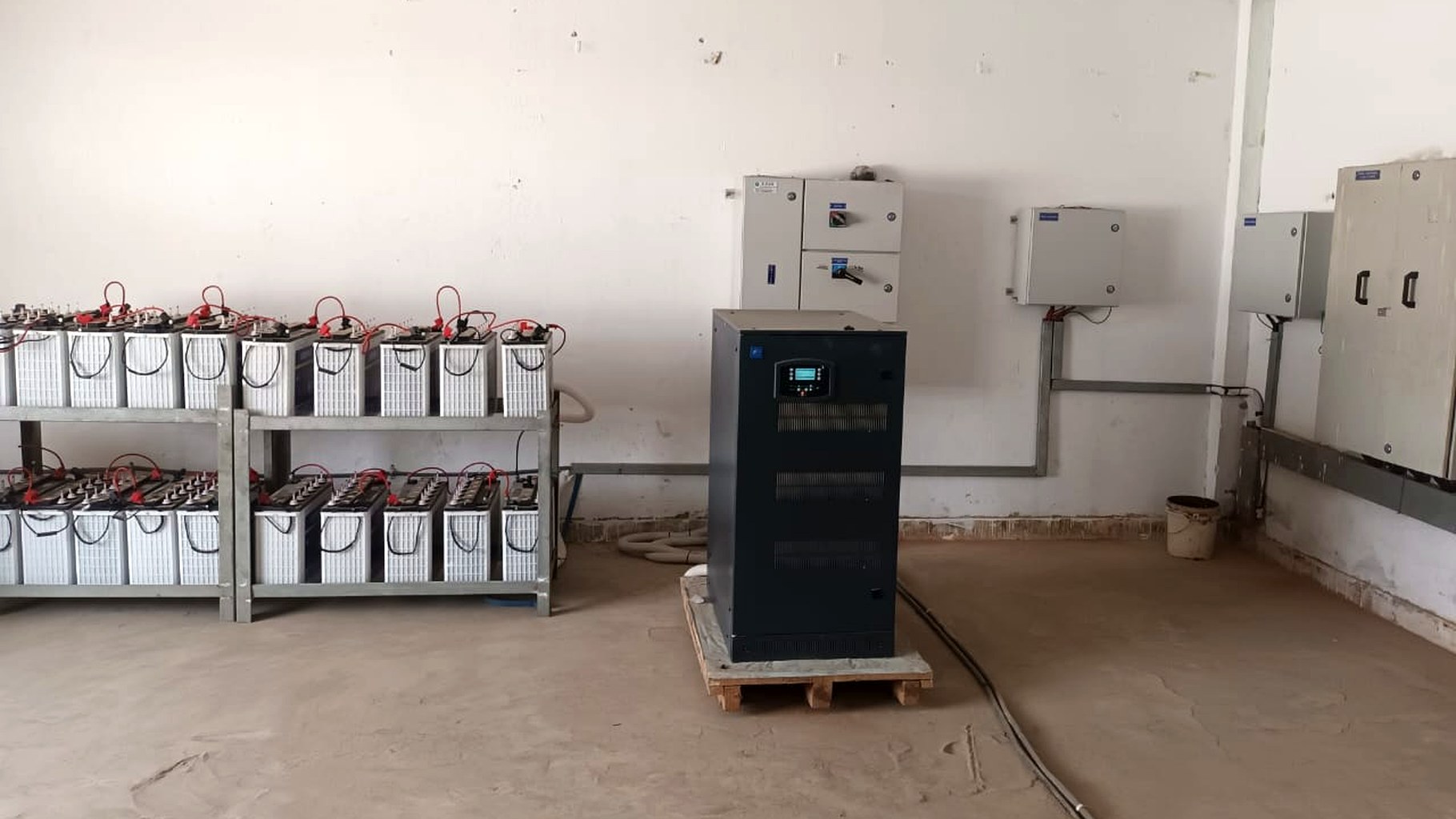
Poultry, dairy and agro-processing units often operate at the edge of the rural feeder where supply quality is patchy. In March 2020 we commissioned a 125 KW / 360 KWh hybrid solar system at Ashrafi Poultry Farm in Khetalpur, Aurai (Bhadohi). The 360 KWh battery sizing carries the farm's critical loads through grid outages without diesel burn. Mr Zafar Mahmood, Director:
"In March 2020 MGetEnergy installed a 125 kW / 360 kWh hybrid solar system at our poultry farm. We could not be happier. Not only has it reduced our monthly energy bills, but it has also increased the overall sustainability of our operation. The installation process was quick and efficient, and the support team was always available."
For agro-industrial buyers in the rice belt, see our specific guide on solar power systems for rice mills.
Educational, institutional and religious complexes
Knowledge Park I, II, III and V institutions in Greater Noida are excellent solar candidates - large flat rooftops, predictable academic-year load curves, governance-driven payback discipline, and now a regulatory mandate as well. We have also delivered institutional solar at smaller scale far beyond NCR: a 10 KW off-grid system at Shri Jambuswami Jain Temple in Bolkhera, Bharatpur, Rajasthan, where the Sansthan president Mr R C Garg (Ex-IPS) confirmed all 40 rooms of the yatri-niwas are powered by solar.
Question 3 - What will it actually cost, and how fast does it pay back?
Solar pricing in India moves with module prices, GST treatment, BESS chemistry and rupee-dollar swings, so any blog-level price quote is a snapshot, not a quotation. The figures below are indicative ranges drawn from 2026 industry benchmarks; your actual price will be confirmed only after a site survey and engineering proposal. Cross-referencing 2026 market data from multiple Indian solar EPCs, indicative all-in CAPEX ranges for C&I projects in the NCR belt are:
- SME / small commercial (25–100 KW): approximately Rs 45–55 thousand per KW installed (Rs 45–55 lakh for a 100 KW system)
- Mid-size industrial (100–500 KW): approximately Rs 38–50 thousand per KW installed (Rs 1.9–2.5 crore for a 500 KW system)
- Large industrial (500 KW – 1 MW+): approximately Rs 3.5–4.5 crore per MW installed
- BESS adder: approximately Rs 35–55 lakh per 100 KWh of usable storage, depending on chemistry and C-rate
Pricing disclaimer: The ranges above are indicative only and vary materially with module brand and tier, inverter selection, mounting type (RCC vs metal-sheet vs ground-mount), electrical complexity, structural retrofitting if required, transportation and installation logistics, applicable GST and any state-level levies, and prevailing market prices at the time of order. They are not a quotation. Final pricing for your site is shared after a free survey.
Final pricing depends on equipment selection, mounting type (RCC vs metal sheet), electrical complexity and DISCOM-side conditions. For a megawatt-scale deep-dive, our 1 MW Solar Power Plant Cost in India 2026 walks through the full bill of materials.
Payback expectations track the underlying tariff and consumption profile. Industrial buyers on higher tariff slabs typically see 3–5 year payback; our Efab Power reference returned investment in 3 years 7 months. Buyers on lower subsidised tariffs may see 5–7 year paybacks. The number compresses further when 40% accelerated depreciation under Section 32 of the Income Tax Act, GST input credit on the solar capex, and demand-charge reduction (via BESS) are layered into the model. Industrial IRR for CAPEX projects in 2026 is reported across the industry in the 18–22% range on baseline assumptions and 22–28% when full tax benefits are utilised - but these are sector benchmarks, not promises for any specific project. As a hedge against rising power tariffs over a 25-year asset life, the cumulative savings dwarf the upfront - see our analysis on solar as a hedge against rising energy costs. For a structured ROI walk-through specific to your facility - using your actual electricity bills, sanctioned load and consumption pattern - our consulting and feasibility service handles the modelling.
Question 4 - CAPEX, OPEX or PPA: which model fits your balance sheet?
The first question a procurement or finance team asks is rarely about modules. It is about cash flow, depreciation and where the asset sits on the balance sheet. We design under all three commercial models and walk CFOs through the trade-offs before quoting any equipment.
CAPEX works best where the buyer is profitable enough to use 40% accelerated depreciation, has cash or term debt at competitive rates, and wants the solar asset on the balance sheet capturing 100% of the tariff savings. Total ownership; highest IRR; typical payback 3–5 years for industrial users.
OPEX (RESCO) works best where the buyer has zero appetite for upfront capital, prefers operating expenditure treatment, and is willing to commit to a 15–25 year offtake contract. The buyer pays a per-unit tariff (typically 25–40% below grid) and the EPC or financing partner owns the plant. Read more about our RESCO model.
PPA sits between the two - a defined-tariff contract with annual escalation, often used by larger industrial buyers, multi-site corporates and PSUs. Predictable cost; no balance-sheet impact; longer commitment than CAPEX. For clusters of industrial buyers in the same DISCOM area, we also structure group captive arrangements, which can avoid cross-subsidy surcharge and additional surcharge that apply to open-access third-party PPAs - improving the per-unit landed cost relative to a standard third-party PPA. The exact saving depends on the buyer's category, state regulations and DISCOM conditions, and is modelled case-by-case.
The deepest analysis we publish on the financial mechanics - peak shaving, demand-charge avoidance, time-of-use arbitrage, and avoided diesel-burn - is in our companion playbook: Solar + BESS for Indian Factories: The CFO's 2026 Avoided Cost Playbook. Read it before you finalise the BESS sizing on any new C&I plant.
Question 5 - Will the EPC still be picking up the phone in year fifteen?
A solar plant is a 25-year asset. PV module warranties run 25 years (linear performance). Inverter warranties run 5–10 years and are extendable. Net-metering contracts run for two decades. Pick an EPC that will outlive the warranty.
For C&I buyers, the durable signals are: years in business, total MWp delivered, number of installations, repeat business from named PSU and corporate clients, and the existence of a real O&M programme that goes beyond brochure language. MGetEnergy has been operating for 13+ years and has delivered 45+ MWp across 400+ installations, including government and institutional clients IOCL, GAIL, AIIMS New Delhi, the Indian Air Force and IWAI, and corporate manufacturing clients including Tecumseh's plant at Ballabgarh, Faridabad.
O&M matters more than most buyers realise on day-one. Soiling alone can drop NCR rooftop output by 8–15% per year. Our O&M service covers scheduled cleaning, preventive electrical inspection, inverter health monitoring (see our primer on on-grid inverters), string-level performance analysis, monthly generation reports and warranty claim management. For more on cost and cadence of professional maintenance, see our guide to solar panel maintenance costs and best practices and our overview of solar monitoring systems.
Industrial Areas of Greater Noida MGetEnergy Serves
Our home turf is the industrial belt that surrounds J-26, Site V, Kasna. We routinely deliver and service projects across:
- Surajpur Industrial Area - manufacturing, warehousing, food processing
- Kasna Industrial Area (Sites IV, V, B, C, UPSIDC) - heavy and light industry; Efab Power's 120 KW system sits here
- Ecotech I, II, III - auto components, engineering, electronics, FMCG
- Udyog Vihar and Udyog Kendra - mixed industrial and corporate
- Knowledge Park I, II, III, V - schools, colleges, universities, research institutes (now under the 2026 institutional solar mandate)
Our wider C&I service area covers Noida, Delhi, Faridabad (including Ballabgarh), Gurugram, Ghaziabad, Aligarh, Agra, Mathura, Bharatpur, Ajmer, Udaipur, Prayagraj, Meerut, Bulandshahr, and Panipat's industrial belt - and pan-India for multi-site PSU and corporate accounts.
About MGetEnergy
Maxoptimus Green Energy Technology Pvt Ltd is a commercial and industrial solar EPC firm headquartered in Greater Noida, founded over 13 years ago by Krishna Singh and Bhupendra Singh. We design and deliver on-grid, off-grid, hybrid and BESS systems from 25 KW up to multi-MW for factories, cold storages, hospitals, institutions and large facilities. 45+ MWp delivered, 400+ installations, government and institutional clients including IOCL, GAIL, AIIMS New Delhi, the Indian Air Force and IWAI, and corporate manufacturing clients including Tecumseh's plant at Ballabgarh, Faridabad. 4.6-star rating from 85+ verified Google reviews. We operate from our Delhi-NCR HQ at J-26, Site V, Kasna Industrial Area, with a Mumbai office serving our western India clients. Read more about us or browse our full services overview and customer testimonials.
Frequently Asked Questions
Which is the best commercial and industrial solar company in Greater Noida?
The right C&I solar partner for a Greater Noida industrial buyer should be headquartered locally so site visits and O&M are same-day, have a 10+ year track record across multiple industries, have direct working relationships with NPCL, PVVNL and UPPCL net-metering desks, and offer all three commercial models (CAPEX, OPEX, PPA). MGetEnergy meets all four - 13+ years, J-26 Site V Kasna address, 45+ MWp delivered, and a client list spanning government and institutional clients (AIIMS New Delhi, IOCL, GAIL, the Indian Air Force) and corporate manufacturers (Tecumseh, Ballabgarh).
How much does a commercial or industrial solar system cost in Greater Noida in 2026?
Indicative all-in CAPEX is approximately Rs 45–55 thousand per KW for SME-scale projects (25–100 KW), Rs 38–50 thousand per KW for mid-size industrial (100–500 KW), and Rs 3.5–4.5 crore per MW for large industrial (500 KW – 1 MW+). BESS, where required, adds approximately Rs 35–55 lakh per 100 KWh of usable storage. These are indicative ranges only and are not a quotation. Actual pricing varies with module and inverter selection, mounting type, electrical complexity, market prices at the time of order, and applicable taxes. Final pricing is shared after a free site survey and is governed by a separate written agreement.
How long does solar payback take for a Greater Noida factory?
Industrial solar payback in NCR is typically indicative 3–5 years for buyers on higher tariff slabs. Our local reference at M/s Efab Power (120 KW on-grid, Site V UPSIDC Kasna, commissioned July 2019) recovered investment in 3 years 7 months and has reported 100% uptime since. Buyers on lower subsidised tariffs may see 5–7 year paybacks. Payback shortens further when 40% accelerated depreciation, GST input credit and demand-charge reduction via BESS are layered into the model. Actual payback for any specific project depends on your applicable tariff, sanctioned load, consumption pattern, financing structure and equipment selection - it is modelled case-by-case during the feasibility study.
What is the Greater Noida Solar Mandate 2026 and does it apply to my building?
The Greater Noida Solar Mandate 2026 requires new educational and institutional buildings (schools, colleges, hospitals) to incorporate rooftop solar, requires new group housing projects to meet 5–10% of total connected load through renewables, and requires residential plots of 300 sq m and above to install rooftop solar. Completion Certificates may be withheld until functional rooftop solar is verified. If your project falls in any of these categories, the question is no longer whether to install solar but who you trust to design and commission it.
What is BESS and why should industrial buyers consider it?
BESS - Battery Energy Storage System - stores electrical energy for discharge when needed. For industrial buyers in Greater Noida the four economic uses are peak shaving, demand-charge reduction, time-of-use arbitrage, and resilience (eliminating diesel-generator burn during outages). Industry analyses suggest BESS can pay back primarily on demand-charge savings within an indicative 5–7 year window for many NCR industrial buyers, but the actual economics depend on the buyer's load profile, demand-charge structure, time-of-day tariff and existing diesel-generator usage. Our full economic analysis is in the Solar + BESS CFO Avoided Cost Playbook.
What is the difference between on-grid, off-grid and hybrid solar for industrial use?
On-grid is grid-tied via a net-metering contract; no batteries; lowest CAPEX; shuts down during grid outages by design (anti-islanding). Off-grid is battery-backed and runs without grid; chosen where grid is absent or unreliable. Hybrid combines grid-tied solar with batteries and an intelligent inverter that switches loads seamlessly between grid, solar and battery - the right choice for hospitals, data centres and any operation where downtime carries direct cost.
How long does industrial solar installation take in Greater Noida?
Indicative timelines from purchase order to commissioning are 3–6 weeks for 25–100 KW systems, 6–12 weeks for 100 KW – 1 MW systems, and 3–6 months for multi-MW projects. The Jeevani Devi Cold Storage 240 KW project commissioned in 3 weeks. Net-metering approval timelines are separate and depend on the DISCOM. NPCL is generally faster than PVVNL or UPPCL for Greater Noida industrial connections.
Do you serve Surajpur, Kasna, Ecotech and Udyog Vihar industrial areas?
Yes - these are our home turf. Our office is at J-26, Site V, Kasna Industrial Area, in the same UPSIDC belt where our Efab Power reference (120 KW on-grid) is installed. Same-day site visits across Surajpur, Kasna, Ecotech I/II/III, Udyog Vihar, Udyog Kendra, UPSIDC Sites B/IV/C and surrounding industrial estates of Greater Noida and Greater Noida West are routine.
What kind of equipment do you use for C&I projects?
We standardise on Tier-1 PV modules and grid-tied or hybrid inverters from manufacturers with strong India presence and bankable warranty terms. Specific equipment selection is project-driven - chosen on the basis of system size, climatic conditions, financing partner empanelment, and the client's own technical preferences. All equipment carries a 25-year linear performance warranty on modules and a 5–10 year warranty on inverters, extendable.
Can you install solar for cold storage, hospitals or factories specifically?
Yes - these are core verticals. Cold storage: 240 KW non-penetrative rooftop at Jeevani Devi Sheetgrah, Aligarh. Hospitals: 20 KW at Shivam Diagnostics, Delhi (operating since 2016) and government and institutional experience including AIIMS New Delhi. Factories: 120 KW at M/s Efab Power Pvt Ltd in Greater Noida (3.7-year payback, 100% uptime), 80 kW + 200 kWh hybrid at Shimnan Rugs carpet manufacturing in Bhadohi, plus corporate manufacturing engagements including Tecumseh's compressor plant at Ballabgarh, and a broader portfolio of 400+ installations totalling 45+ MWp.
Get a C&I Solar Proposal for Your Greater Noida Facility
Disclaimer. All pricing, payback, IRR, savings, tariff and timeline figures referenced in this guide are indicative ranges based on 2026 market data and are presented for general illustration only. They are not a commercial offer, a quotation, or a guarantee of outcomes. Actual project pricing, payback, IRR and savings depend on equipment selection (modules, inverters, BESS chemistry), mounting type, site conditions, electrical complexity, structural retrofitting, prevailing market prices at the time of order, applicable taxes and duties, financing structure, the buyer's specific tariff slab and consumption profile, and DISCOM-specific commercial conditions. Tariffs are subject to periodic regulatory revisions. Final pricing, payback, IRR and any commercial offer for your facility are confirmed only after a free site survey, engineering proposal and a separate written commercial agreement, the terms and conditions of which will govern the engagement.
If you are a plant manager scoping a rooftop survey, a CFO running CAPEX vs OPEX numbers, a Knowledge Park institution working through the 2026 mandate, or a procurement head running an EPC RFQ for a Greater Noida facility, we are ready to engage. Our engineering team will visit your site, audit your load profile, and submit a costed proposal - typically within 7–10 working days for C&I projects.
Phone: +91 98218 76325 | +91 98186 66325
Email: wecare@mgetenergy.com
Delhi-NCR HQ: Maxoptimus Green Energy Technology Pvt Ltd, J-26, Site V, Kasna Industrial Area, Greater Noida, Uttar Pradesh - 201310
Mumbai Office: B18/A Hindsourashtra Industries Co-op, Andheri-Kurla Road, Andheri East - 400059, MH
Hours: Monday–Saturday, 9:30 AM – 5:30 PM IST