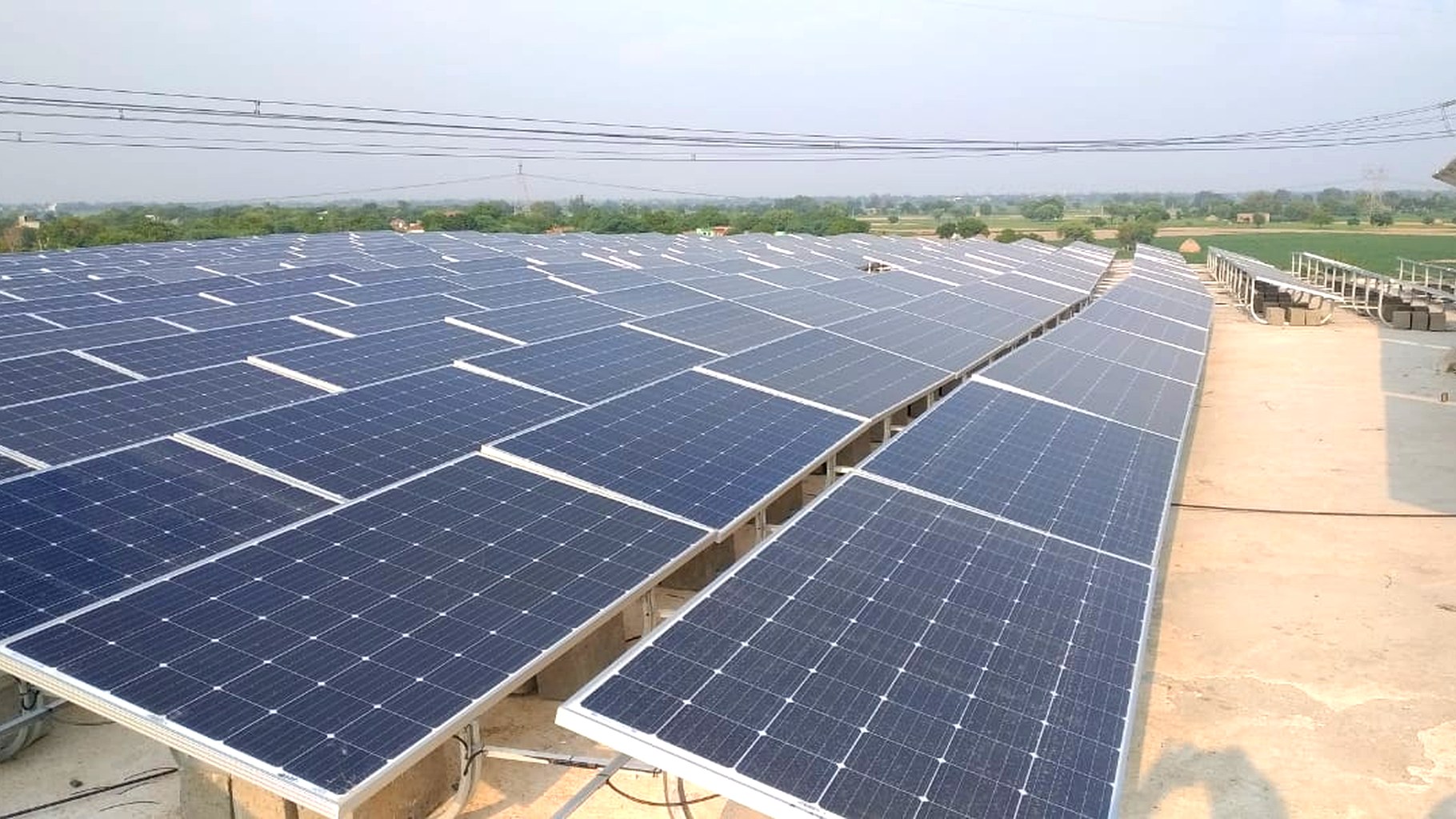
For most Indian factories, the power story has been the same for thirty years: buy electricity from the grid, run a diesel generator when the grid fails, repeat. That story is changing. Across India in 2026, a growing number of industrial facilities are moving from grid-dependent operations to self-sufficient power architectures — built on solar generation, battery energy storage, and intelligent controls that work together as a single system. The technical name is an industrial microgrid. The practical name is outage-proof power.
Three forces are pushing this shift right now. First, diesel runs expensive — between fuel cost, GST, transport, and engine wear, the marginal cost of a kWh from a captive DG set sits well above the cost of a kWh delivered from a properly-sized solar + BESS combination. Second, time-of-day (ToD) tariffs continue to evolve across state DISCOMs, putting heavy peak-hour cost on industrial consumers and rewarding those who can shift load to off-peak windows. Third, state-level BESS mandates are starting to appear in policy frameworks — Maharashtra's 2025 RE & Energy Storage Policy is the most visible example, with other states drafting similar provisions.
Crucially, this isn't a future technology being marketed prematurely. Indian C&I sites have been deploying microgrids for years — at MGetEnergy we commissioned a hybrid solar + BESS system at Ashrafi Poultry in Bhadohi back in 2020, and a larger 250 kW + 600 kWh hybrid system at Kapil Muni Agro Foods in 2021. Both have been running successfully for several years. What's different in 2026 is that the economic case has matured to the point where every mid-sized industrial facility evaluating its power strategy needs to at least consider the microgrid option seriously.
This guide is about the architecture and design of industrial microgrids — how they're built, sized, and operated. For the detailed financial modelling — avoided cost analysis, ToD arbitrage economics, accelerated depreciation treatment — see our Solar + BESS CFO Avoided Cost Playbook.
What an Industrial Microgrid Actually Is
An industrial microgrid is a self-contained power system serving a single facility — typically a factory, warehouse, cold storage, agro-processing plant, or large commercial complex — that combines on-site generation (almost always solar PV), battery energy storage, and a control layer that decides moment-to-moment how power flows. It can run grid-connected, grid-independent, or both, depending on what the facility needs at any given time.
A microgrid is not the same as "solar + battery." A solar + battery setup is a parts list. A microgrid is a system. The difference is the integration layer — the inverters, the energy management software, the protection and switchgear — that lets the components work together intelligently, including the ability to disconnect from the utility grid during an outage and continue running on its own. That last capability is called island mode, and it is what separates a real microgrid from a fancy backup setup.
The four operating modes a microgrid runs in
| Mode | What it does | When it's active |
|---|---|---|
| Grid-tied with self-consumption | Solar feeds the facility load directly; surplus charges BESS; grid covers the gap | Daytime, normal grid operation |
| Grid-tied with peak-shaving | BESS discharges during peak ToD hours to reduce billed kW and ToD energy charges | Peak tariff windows, grid available |
| Hybrid load-following | Solar + BESS + grid blend continuously; EMS optimises for cost or carbon | Most of normal operation |
| Island mode | Microgrid disconnects from grid; runs purely on solar + BESS (and DG if integrated) | Grid outage, planned isolation, or grid-quality issues |
A well-designed microgrid moves between these modes automatically. The facility manager doesn't choose the mode — the energy management system does, based on rules set during commissioning.
The Five Components and How They Integrate
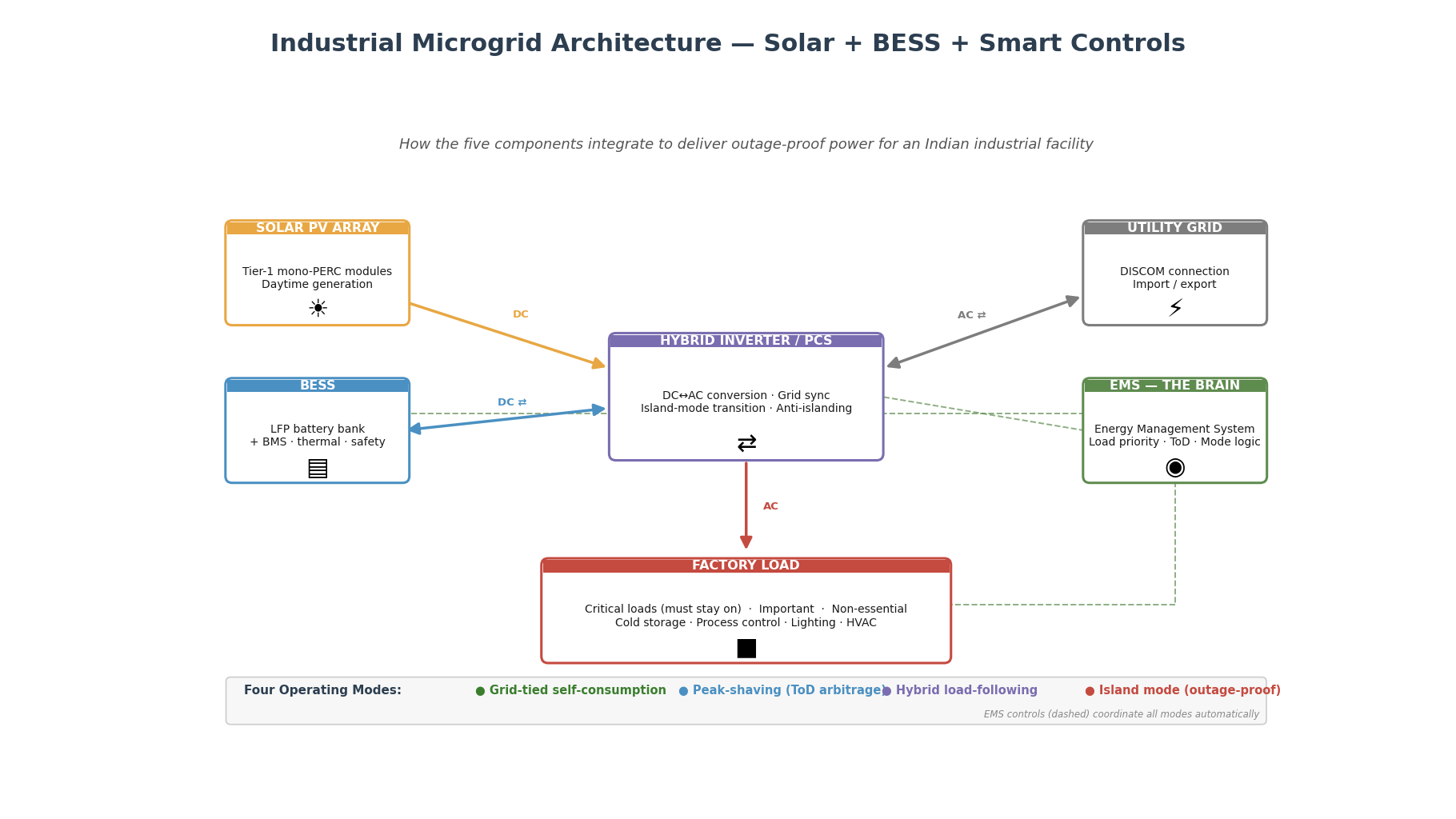
A complete industrial microgrid has five integrated components. Each is a real piece of hardware, but the value comes from how they talk to each other.
1. Solar PV array
The generation source. Industrial microgrids typically use tier-1 monocrystalline modules (mono-PERC or n-type), sized between 100 kWp and 5 MWp depending on the facility's load profile and roof or land area. The DC output flows to the inverter / PCS through string combiner boxes and DC cabling rated for the project's voltage class.
2. Battery Energy Storage System (BESS)
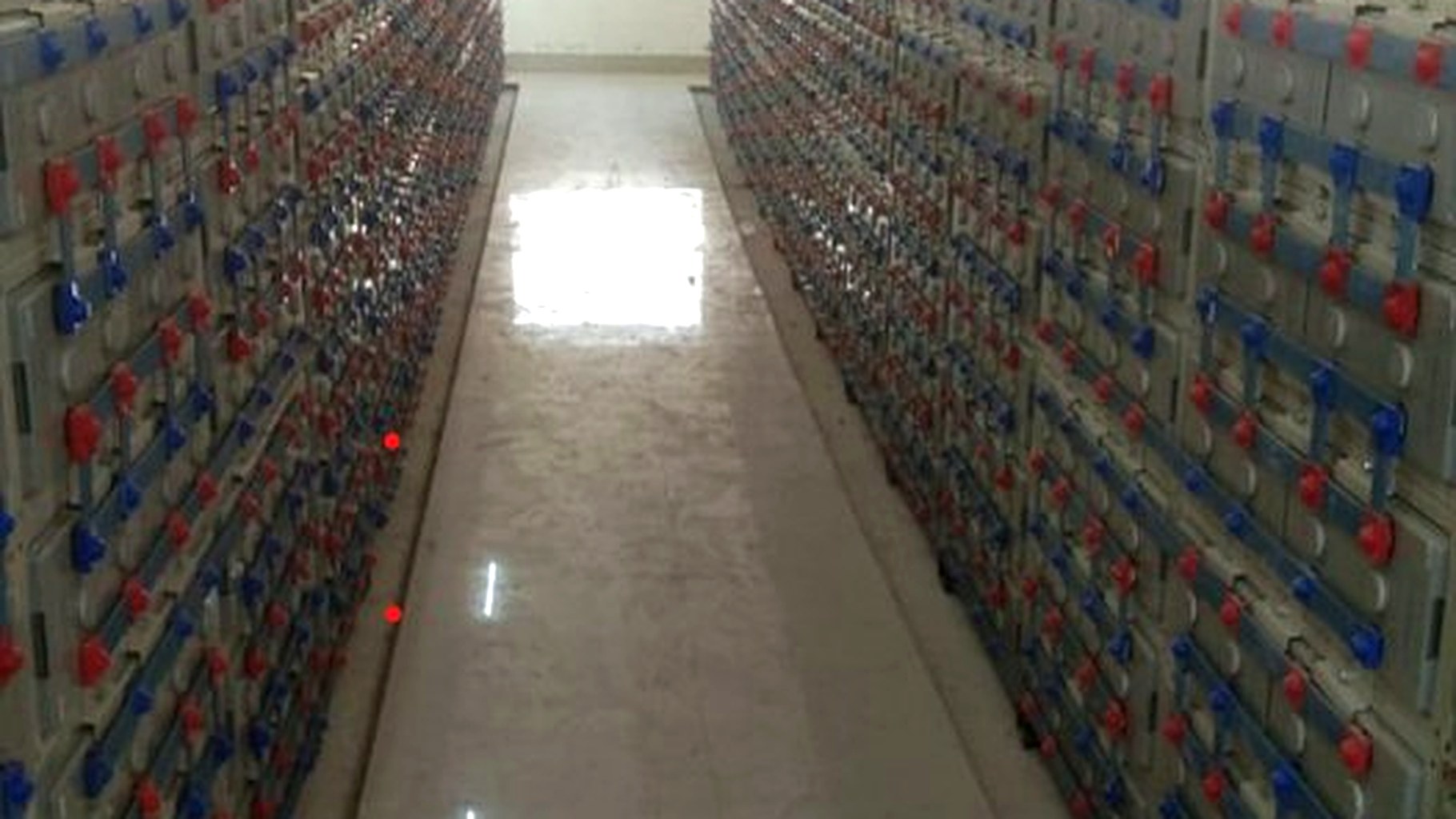
The storage and resilience layer. Modern industrial BESS for new projects in 2026 is overwhelmingly lithium iron phosphate (LFP) chemistry — chosen for safety profile, cycle life (typically 6,000+ cycles at meaningful depth-of-discharge), and lifespan that aligns with the rest of the microgrid's design horizon. Older deployments (including some pre-2022 hybrid projects) used tubular lead-acid or VRLA chemistries, which still operate reliably where they're installed but are no longer the standard choice for new builds.
The BESS isn't just a bank of cells. It includes a battery management system (BMS) that monitors every cell's voltage and temperature, thermal management, fire-detection / suppression, and protective enclosures. For component-level depth on BESS architecture, see our Comprehensive Guide to Battery Energy Storage Systems.
3. Hybrid inverter / Power Conversion System (PCS)
The conversion and sync layer. The inverter takes DC from the solar array and DC from the BESS and converts both to grid-quality AC at the facility's connection voltage. In a microgrid, this is usually a hybrid inverter or PCS — designed specifically for systems where solar, battery, and grid all coexist. The PCS handles synchronisation, anti-islanding compliance during grid-tied operation, and seamless transition into island mode when the grid drops.
4. Energy Management System (EMS)
The brain. This is the most-overlooked component in industrial microgrid procurement, and the one that distinguishes a real microgrid from a parts-list. The EMS is software (running on a dedicated controller, often industrial PLC-based) that decides, second-by-second, what the system should do: how much solar to direct to load vs. battery, when to peak-shave from the BESS, when to disconnect from grid in island mode, which loads to prioritise during an outage. It does this against rule sets configured for the facility's tariff structure, load criticality, and resilience targets.
A microgrid with weak EMS specification underperforms. A microgrid with strong EMS specification quietly compounds savings every day for fifteen years.
5. Grid interface and protection
The boundary. This includes the step-up or step-down transformer (depending on facility connection voltage), isolator panels, switchgear, anti-islanding-compliant relays, and metering. This layer is what makes the microgrid safe, compliant with DISCOM connection codes, and operationally clean. It's typically the smallest line item in the capex but the most consequential for getting commissioning approval and avoiding rework.
When all five components are properly integrated — designed, sized, and commissioned by a single accountable EPC — the microgrid behaves as one system. When components are bought separately from different vendors with no clear integrator, the result is usually a parts collection that doesn't quite work as advertised. A well-specified microgrid is a candidate for our Hybrid + BESS service, where the entire system is delivered as a single integrated EPC engagement.
Right-Sizing the Microgrid: A Methodology
The single biggest determinant of whether an industrial microgrid pays back in 4 years or 9 years is how it's sized. This is not a vendor question. It is an engineering question that has to be answered before any equipment is ordered.
Step 1: Load profile audit
Sizing starts with a real measurement of how the facility consumes power, not an estimate from the connected load. Over a representative period — minimum two weeks, ideally a month covering one billing cycle — the facility's existing meter (or a clamp-on data logger) records:
- 24×7 average kW
- Peak demand kW and the time of day it occurs
- Off-peak / on-peak / peak-hour distribution per the relevant ToD tariff schedule
- Load criticality classification — which loads must stay on during a grid outage (cold-storage compressors, process control, ventilation), which can be shed (office HVAC, non-critical lighting)
This audit produces the inputs for everything that follows. Skipping it is the single most common — and most expensive — mistake in microgrid procurement. Where a facility doesn't already have detailed metering, this is exactly the kind of work covered by our Consulting & Feasibility service.
Step 2: Solar sizing
For most C&I facilities, solar capacity is sized at 1.2 to 1.5 times the daytime average load. Higher than that wastes generation (excess sent to grid at low feed-in rates or curtailed); lower than that under-uses available rooftop area. The exact ratio depends on roof area available, shading, orientation, and whether the project will export surplus or self-consume only.
Step 3: BESS sizing — pick the primary objective first
The BESS can be sized for one of three objectives:
- Peak-shaving: size for the kWh that needs to be shifted out of the peak ToD window each day
- Autonomy: size for the kWh × hours the facility needs to run in island mode during a grid outage
- Mandate compliance: size to meet a state-policy minimum (in mandate states)
These objectives produce different BESS sizes for the same facility. Pick one as primary and size the other as a constraint. Trying to optimise for all three simultaneously usually produces an oversized, overcost system.
Step 4: Inverter / PCS rating
The hybrid inverter is sized to handle the largest of: peak solar generation, peak BESS discharge, or the inrush current of critical loads during island-mode startup. Motor-heavy facilities (compressors, large pumps, mills) often need PCS oversizing relative to steady-state load to handle motor starting in island mode.
The two traps
Oversizing without economics: "We want full 24-hour autonomy." Build the BESS for that and the capex grows so much that payback stretches past the BESS warranty period. Most facilities don't actually need 24-hour autonomy; they need 2–6 hours of bridge through typical outage windows.
Undersizing without resilience: "We'll add capacity later." Switchgear, transformer, and PCS capacity often get locked at the initial sizing and become expensive to upgrade. Plan headroom for 30–50% future expansion at the design stage even if not all of it is built on Day 1.
Four Scenarios Where Industrial Microgrids Pay Off in 2026 India
Microgrids aren't universally the right answer. Here are the four facility profiles where the case is strongest in India today.
Scenario 1: Frequent grid outages, currently bridged by DG
Facilities with chronic grid unreliability — particularly in industrial belts of UP, Bihar, parts of West Bengal, parts of Maharashtra, and rural-edge locations across India — typically run their DG sets for several hours per week. The marginal cost of a kWh from a diesel set is high once fuel, GST, engine wear, and labour are accounted for. When weekly DG runtime crosses a threshold (depends on diesel price and DG efficiency, but generally somewhere in the range of a few hours per week), a properly-sized BESS becomes economically attractive purely on avoided diesel — before any other benefit is counted.
Scenario 2: Heavy time-of-day (ToD) tariff exposure
Many state DISCOMs now charge HT industrial consumers a peak-hour ToD premium on energy, often 15–25% above the base slab rate, applied during evening peak windows. A microgrid with adequate BESS shifts load out of the peak window — discharging the BESS during peak, recharging from solar during the day or from the grid in off-peak hours when tariffs are lowest. The detailed economics for this scenario are worked through in our Solar + BESS CFO Avoided Cost Playbook, with worked examples for HT industrial consumers in Maharashtra under the current MERC tariff regime.
Scenario 3: High demand-charge component on the bill
For most HT industrial consumers, demand charges (billed in Rs per kVA of contract demand or maximum demand) are a substantial fraction of the monthly bill — often 30–40% of total. A microgrid with well-tuned EMS can perform peak-shaving on the demand profile, bringing down the maximum demand reading and proportionally cutting that fixed-monthly-charge component. In some configurations this savings line alone justifies the BESS portion of the capex.
Scenario 4: Mandate compliance
Maharashtra's 2025 RE & Energy Storage Policy introduced storage requirements for certain industrial consumer categories. Several other states have draft policies in similar territory. Where a mandate applies, a microgrid is no longer optional — the question is only whether to design it for mere compliance or to size it slightly larger to capture the economic benefits in scenarios 1–3 simultaneously. Compliance plus economic optimisation is almost always cheaper over the asset lifetime than compliance alone.
Real Indian Deployments — Two Case Studies
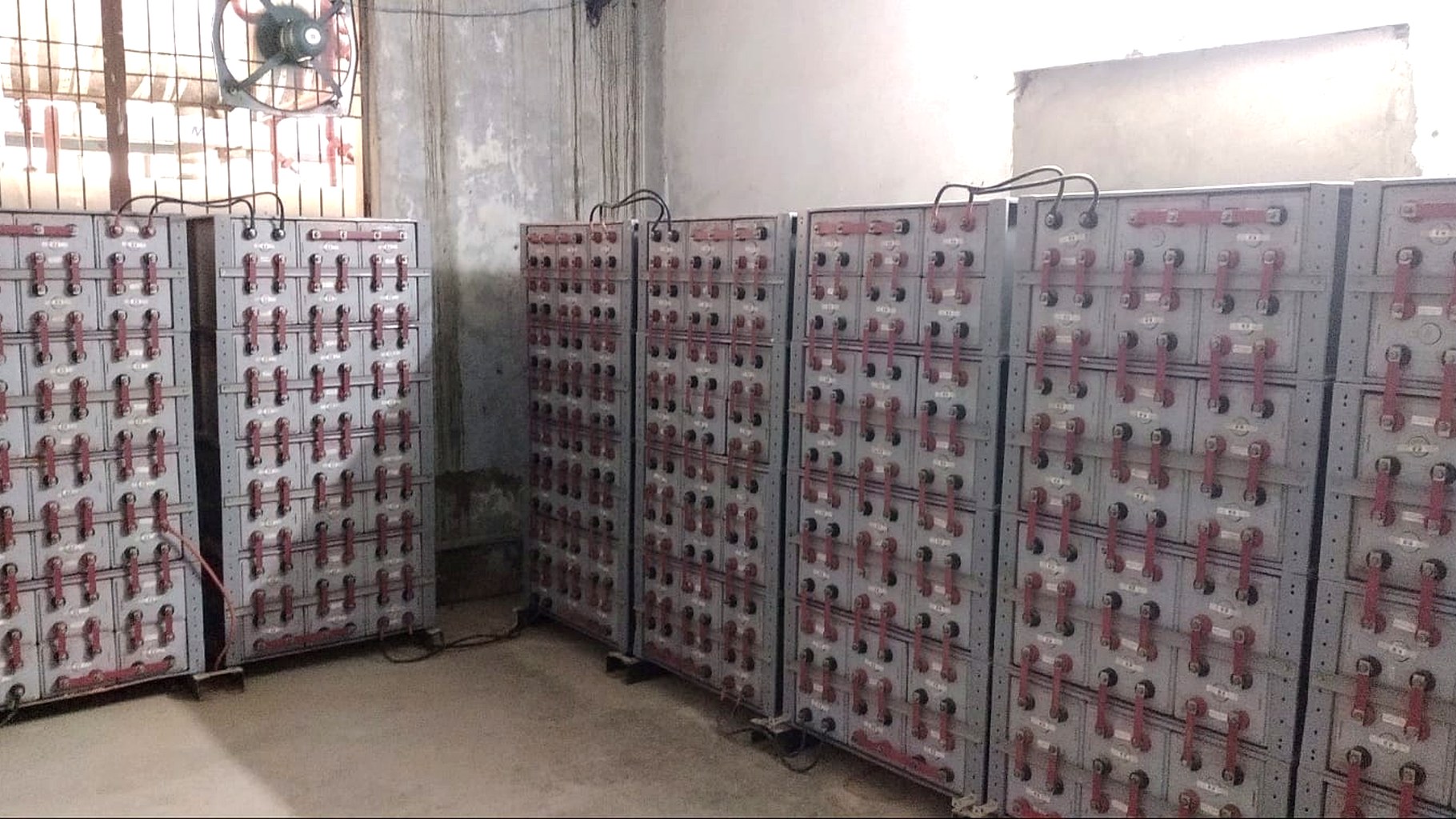
These aren't theoretical examples. They are operational microgrids MGetEnergy has built and continues to maintain.
Ashrafi Poultry Farm — Bhadohi, UP (commissioned March 2020)
System: 125 kW solar + 360 kWh BESS, hybrid architecture.
The site is a poultry processing facility in Khetalpur, Aurai (Bhadohi) — rural-edge UP, where grid reliability is patchy and outage durations can run into hours rather than minutes. Poultry operations have non-negotiable continuity requirements: incubation temperature control, ventilation, water pumps, and refrigeration cannot drop offline without immediate consequences.
The microgrid was specified for hybrid operation — daytime solar self-consumption combined with BESS-backed island-mode capability for any grid event. The system continues to operate as designed.
Kapil Muni Agro Foods — Bewar, Mainpuri, UP (commissioned 2021)
System: 250 kW solar + 600 kWh BESS, hybrid architecture.
A larger agro-processing facility in Bewar, Mainpuri district of UP. Similar architectural choice — hybrid solar + BESS with island-mode capability — at roughly twice the scale of Ashrafi. The 2:1 power ratio (solar kW to BESS kW) and 1:2.4 energy ratio (solar daily kWh to BESS kWh) reflect the facility's daytime solar offset combined with multi-hour evening / outage autonomy.
The pattern across both projects is consistent: agro-processing in semi-rural UP, hybrid architecture chosen for grid-outage resilience, both projects operational and successful several years after commissioning. What this demonstrates is straightforward — industrial microgrids in India are not theoretical or future-state. The architecture has been proven at scale, in real industrial conditions, for years.
What an Industrial Microgrid Actually Costs
The capital cost of an industrial microgrid is typically split as:
- 50–60% solar — modules, mounting structure, DC and AC cabling, string inverters or central inverter
- 30–35% BESS — battery modules, BMS, racks, thermal management, fire safety, enclosure
- 10–15% controls and integration — EMS, PCS, switchgear, transformer, protection, communications, commissioning
Indicative payback windows for hybrid C&I microgrids fall in the 4–7 year range, though this depends heavily on which of the four scenarios above is the dominant economic driver. The savings come from five compounding levers:
- Solar self-consumption — every kWh generated and consumed on-site offsets a kWh purchased from the grid at the prevailing retail tariff
- BESS peak-shaving — reduces the demand-charge component of the bill
- BESS ToD arbitrage — shifts energy out of peak-tariff windows
- Avoided diesel — replaces DG runtime with BESS discharge at lower marginal cost
- Accelerated depreciation — Section 32 of the Income Tax Act allows 40% AD on solar + BESS assets, materially improving after-tax economics
For a worked financial model — including representative numbers for a 2 MW HT industrial consumer in Maharashtra — see our Solar + BESS CFO Avoided Cost Playbook. For zero-CAPEX procurement options where the equipment is owned by a third party and the facility pays only for power delivered, see our RESCO model and PPA / Group Captive service pages.
Six Mistakes to Avoid When Buying an Industrial Microgrid
- Treating it as a parts shopping list. Solar + battery from different vendors with no integrator owning the EMS layer almost always underperforms. Buy the system, not the parts.
- Skipping the load profile audit. Without measured 24×7 data, every sizing decision after that is a guess. The audit takes 2–4 weeks. Skipping it is the single most expensive corner-cut in microgrid procurement.
- Picking equipment before sizing. "We want X-brand inverter and Y-brand battery" before the load study is complete is a common but costly sequence error. Size first, specify second.
- Underspecifying the EMS. This is where most commodity offerings fall short. Ask hard questions about EMS rule configurability, response time, integration with existing facility SCADA, and remote-monitoring capability. The EMS is the difference between a functional setup and a system that compounds savings.
- No clear integration responsibility. When solar EPC, BESS supplier, and electrical contractor are three separate parties with no integrator above them, commissioning becomes a finger-pointing exercise. Pick a single accountable EPC for the whole microgrid.
- Skipping grid compliance documentation upfront. DISCOM single-line-diagram approval, anti-islanding protection scheme documentation, and metering arrangements need to be designed in from Day 1. Retrofitting compliance after equipment selection is expensive and slow.
How MGetEnergy Approaches an Industrial Microgrid Project
Our process across 13+ years of EPC delivery has converged on the following phases:
- Site visit + load profile capture — physical site assessment combined with deployment of meter / data logger to capture 2–4 weeks of real load data
- Feasibility study — sizing analysis, capex / opex modelling, recommended architecture, payback estimate
- Proposal with financing options — CAPEX (you own the asset), RESCO (third-party ownership, you buy the power), or PPA / Group Captive — your choice driven by cash flow preference
- Integration design — single-line diagrams, EMS rule configuration, DISCOM compliance documentation, civil and structural design
- Installation phasing — scheduled to minimise production disruption; commissioning of solar first, BESS second, EMS integration third where the project allows
- Commissioning + performance tests — including island-mode transition testing
- O&M handover with EMS dashboards — operational training plus optional O&M services for ongoing monitoring, performance reporting, and maintenance
The aim is for you to receive a system that works as one unit, with one accountable EPC, and operating data you can actually use.
Frequently Asked Questions
What is the difference between a microgrid and just adding a battery to my solar?
A microgrid is a system designed to operate as one unit, including the ability to disconnect from the utility grid during an outage and continue running. Solar + battery without that integration layer cannot do island mode safely or automatically. The Energy Management System and the protection layer are what make the microgrid a microgrid.
How long can my factory run on island mode during a grid outage?
That depends entirely on how the BESS is sized relative to your critical-load profile. Typical industrial microgrids are sized for 2–6 hours of full critical-load autonomy, which covers the vast majority of grid outage events in most parts of India. Longer autonomy is technically possible but the economic return diminishes — most facilities are better served by a moderate BESS plus an integrated DG fallback for rare extended outages.
Do I need to replace my existing diesel generator?
Usually no. In most retrofit projects, the existing DG is integrated into the microgrid as a tertiary backup — solar + BESS handles routine outages, and the DG starts only for extended events that exceed BESS autonomy. This typically reduces DG runtime by 80–95% while preserving the resilience benefit.
Does the microgrid need DISCOM approval?
Yes — like any solar or hybrid system that interfaces with the grid, the microgrid requires DISCOM net-metering or interconnection approval, single-line-diagram review, and anti-islanding protection compliance. The specific procedure varies by state (UPPCL, NPCL, MSEDCL, BSES, etc.) but the broad steps are well-established. We handle this end-to-end.
What is the typical project timeline?
For a mid-sized industrial microgrid (200 kW – 1 MW solar with proportionate BESS), the timeline from kick-off to commissioning is typically 16–24 weeks, broken roughly as: 4 weeks feasibility and proposal, 4 weeks design and DISCOM approvals, 8–12 weeks installation, 2–4 weeks commissioning and performance testing.
What if my factory expands later — can the microgrid scale?
Yes, if it's designed for it. Switchgear, transformer, and PCS sizing should include 30–50% expansion headroom at Day 1. With that planned, additional solar can be added in phases without major rework, and BESS capacity can be expanded modularly in most modern architectures.
How does the EMS prioritise loads during a grid outage?
Loads are classified during commissioning into critical (must stay on), important (stay on if BESS state-of-charge is healthy), and non-essential (shed during island mode). The EMS executes this load-priority logic automatically when the microgrid transitions into island mode. Priorities can be reconfigured remotely if facility needs change.
Are there subsidies or tax benefits for industrial microgrids in India?
The most consistently-applicable tax benefit is Section 32 accelerated depreciation (40% AD WDV) on solar and BESS assets, which materially improves after-tax economics for profit-making industrial entities. State-specific subsidies for solar exist in some states; BESS-specific incentives are still evolving and vary by state. We assess applicable benefits during the feasibility study for your specific location and entity structure.
Free Site Visit and Microgrid Feasibility Study
If you're evaluating whether an industrial microgrid is right for your facility, the next step is a real load profile audit and feasibility study. We offer this as a no-obligation service for industrial buyers across India.
📞 +91 98186 66325 · +91 98218 76325
✉ wecare@mgetenergy.com
Or visit the Hybrid + BESS service page for more on our microgrid offerings, or Consulting & Feasibility for the standalone study service.
For specific buyer guides relevant to your context, see also:
- 1 MW Solar Power Plant Cost in India 2026 — for facilities sizing pure solar capex
- Solar + BESS CFO Avoided Cost Playbook — for detailed financial modelling of the BESS economics
- Solar Company in Greater Noida — C&I Buyer's Guide — for buyers in NCR specifically