Educational institutions are increasingly focusing on sustainability, recognizing the need to reduce their carbon footprint and become leaders in environmental stewardship. One of the most effective ways to achieve this is by adopting solar power systems. This guide will explore the benefits, considerations, and best practices for implementing solar power in educational institutions, ensuring that your school or college can lead in the green revolution.
Importance of Sustainability in Educational Institutions
Far from a trend, sustainability is a crucial responsibility we all carry. Educational institutions, as centers of learning and innovation, have a unique opportunity to set an example for the community by adopting renewable energy solutions. Implementing solar power systems aligns with the broader goals of sustainability and the Green Campus Initiative. This initiative emphasizes the importance of creating eco-friendly, energy-efficient campuses that contribute positively to the environment.
Benefits of Solar Power for Educational Institutions
Solar power offers numerous benefits for educational institutions, making it a valuable investment for schools and colleges. By focusing on Best Practices for Solar Power Adoption in Educational Institutions, these benefits can be maximized:
- Cost Savings: Solar power systems can significantly reduce electricity bills, allowing institutions to allocate funds to other essential areas. Implementing Best Practices for Solar Power Adoption in Educational Institutions ensures these savings are optimized.
- Environmental Impact: Reducing carbon emissions and reliance on fossil fuels is crucial. Schools and colleges that adopt solar power contribute to a cleaner environment, further supporting the Green Campus Initiative.
- Educational Opportunities: Solar power systems provide real-life examples of renewable energy in action. Institutions can create Solar-Powered Classrooms where students learn about sustainability and renewable energy, reinforcing the principles of the Green Campus Initiative.
- Community Engagement: Adopting solar power can inspire the local community to pursue similar initiatives. Schools can serve as a model for other institutions, highlighting the benefits and Best Practices for Solar Power Adoption in Educational Institutions.
Understanding Solar Power Systems
Before installing a solar power system, it's essential to understand the basic components and types of systems available.
- Basic Components: A solar power system typically includes solar panels, inverters, batteries (for storage), and a monitoring system. Together, these components harness sunlight and convert it into electricity.
- Types of Solar Systems: Educational institutions can choose between grid-tied, off-grid, and hybrid solar systems. Each type has its advantages, depending on the institution's energy needs and goals.
- Solar Energy Generation: Solar power systems harness energy from the sun, which is then converted into electricity. This energy can power various facilities on campus, from classrooms to sports facilities, supporting the Green Campus Initiative.
Overcoming Challenges in Solar Power Adoption for Schools
While the benefits are clear, Overcoming Challenges in Solar Power Adoption for Schools is crucial for a successful implementation. Some of the common challenges include:
- Technical Challenges: Schools may face technical difficulties related to system design, installation, and maintenance. By focusing on Best Practices for Solar Power Adoption in Educational Institutions, these challenges can be mitigated.
- Policy and Regulatory Barriers: Navigating the complex regulations surrounding solar power can be challenging. Understanding local policies and working with experienced providers can help in Overcoming Challenges in Solar Power Adoption for Schools.
- Grid Stability: Integrating a solar power system into the existing grid can pose challenges. Schools must ensure that their systems are compatible with the grid to avoid disruptions.
Benefits of Rooftop Solar in Educational Institutions
Rooftop solar installations offer unique benefits, particularly for educational institutions. These benefits align closely with the goals of the Green Campus Initiative and include:
- Space Utilization: Rooftop solar systems make efficient use of available space. Educational institutions often have large, unused rooftop areas that can be transformed into energy-generating assets, contributing to the success of the Green Campus Initiative.
- Shading and Orientation: Proper planning of shading and panel orientation is critical. Schools must ensure that their systems are designed to maximize energy generation, supporting the creation of Solar-Powered Classrooms and other facilities.
- Cost-Effective Installation: Rooftop installations are often more cost-effective than ground-mounted systems. By leveraging existing structures, schools can reduce installation costs while still achieving significant energy savings.
- Site Assessment: A thorough site assessment is essential to determine the feasibility of a solar power system. Schools should consider roof condition, space availability, and potential shading issues.
- Government Incentives: Schools can benefit from various government incentives that make solar power more affordable. Understanding these incentives is crucial for Overcoming Challenges in Solar Power Adoption for Schools.
- System Size and Storage: The size of the system should match the institution's energy needs. Additionally, schools should consider incorporating storage solutions to ensure a consistent energy supply.
- Maintenance and Upkeep: Regular maintenance is necessary to keep the system functioning optimally. Schools should plan for ongoing maintenance to avoid any disruptions in energy generation.
- Cost Considerations: The upfront cost of a solar power system can be substantial. However, schools should consider the long-term savings and potential returns on investment.
- Financing Options: Various financing options are available, including loans, leases, and power purchase agreements (PPAs). Schools should choose the option that best fits their financial situation and long-term goals.
- Return on Investment: The ROI for solar power systems can be significant, especially when Best Practices for Solar Power Adoption in Educational Institutions are followed. Schools can expect to see returns in the form of reduced energy bills and lower operational costs.
- Rooftop Suitability: Assessing the suitability of rooftops is the first step in maximizing solar potential. Factors like roof condition, angle, and available space must be considered.
- Space Availability: Educational institutions often have ample rooftop space that can be utilized for solar installations, making it easier to implement Best Practices for Solar Power Adoption in Educational Institutions.
- Shading and Orientation: Proper planning of shading and panel orientation is critical to maximizing energy generation and supporting the creation of Solar-Powered Classrooms.
- Energy Independence: Solar power systems provide schools with greater energy independence, reducing reliance on external energy sources.
- Resilience: Solar power systems can enhance the resilience of educational institutions, particularly in areas prone to power outages.
- Research and Development: The implementation of solar power systems can open up opportunities for research and development, allowing students and faculty to explore new technologies and innovations in renewable energy.
Factors to Consider Before Installation
Several factors must be considered before installing a solar power system in an educational institution:
Financing Solar Power Systems
Financing is a significant consideration for educational institutions looking to adopt solar power. By understanding Best Practices for Solar Power Adoption in Educational Institutions, schools can explore various financing options:
Rooftop Solar Potential in Educational Institutions
Rooftop solar has immense potential in educational institutions, contributing to the Green Campus Initiative and the development of Solar-Powered Classrooms and Solar-Powered Sports Facilities:
Additional Benefits of Solar Power
Beyond the primary benefits, solar power systems offer additional advantages for educational institutions:
Case Studies and Best Practices
Successful case studies provide valuable insights into Best Practices for Solar Power Adoption in Educational Institutions:
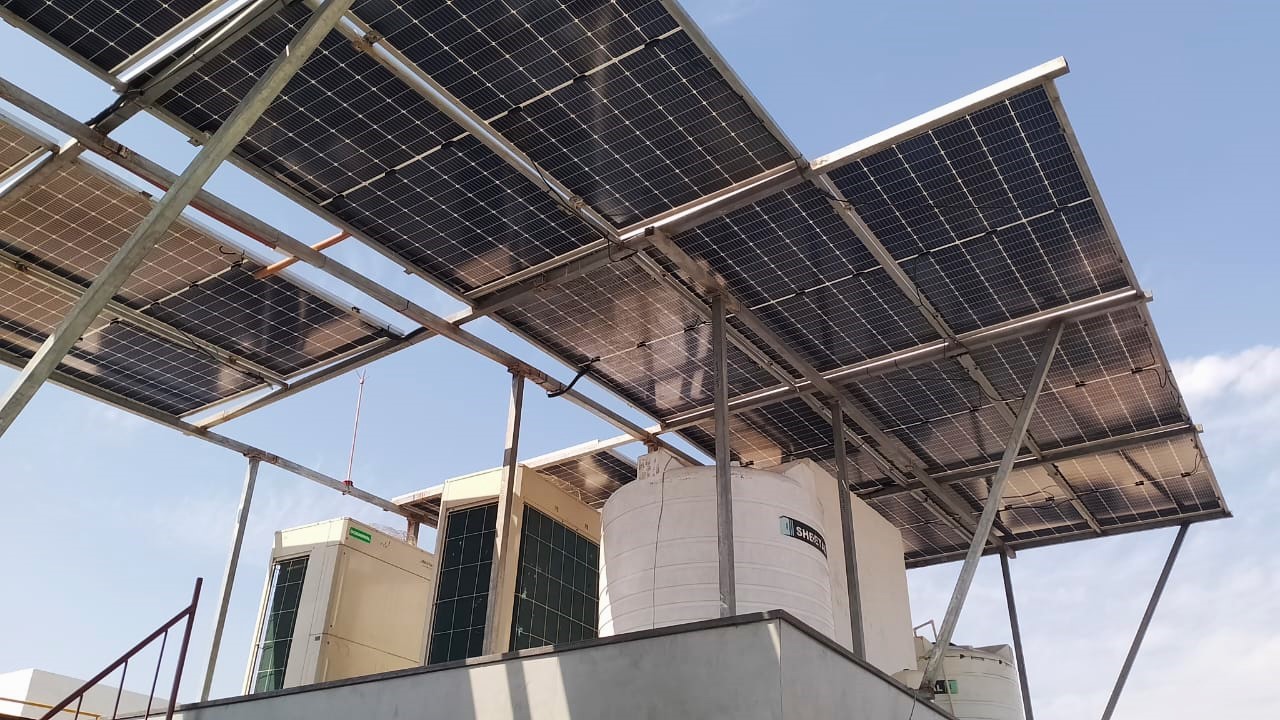
Case Study: MGetEnergy’s Successful Solar Installation in an Educational Institution MGetEnergy recently completed a solar power installation at a prominent educational institution in Northern India(Kapil Muni Children's Academy, Bewar Mainpuri, Uttar Pradesh). The project involved installing a rooftop solar system designed to meet the energy needs of the entire campus. The institution was particularly focused on creating Solar-Powered Classrooms and reducing its carbon footprint as part of its commitment to the Green Campus Initiative.
Despite initial challenges such as space constraints and regulatory hurdles, the project was successfully executed, resulting in substantial energy savings for the institution. The installation not only powers classrooms but also supports Solar-Powered Sports Facilities, making the institution a model of sustainability in the community. The project also provided educational opportunities for students, allowing them to learn firsthand about renewable energy and sustainability.
These simplified examples highlight the potential for educational institutions to adopt solar power successfully, benefiting both the institution and the broader community.
Conclusion
Solar power systems present an excellent opportunity for educational institutions to enhance sustainability, reduce costs, and provide educational opportunities. By adhering to Best Practices for Solar Power Adoption in Educational Institutions and addressing Overcoming Challenges in Solar Power Adoption for Schools, schools and colleges can lead the way in renewable energy adoption. The Green Campus Initiative, along with the creation of Solar-Powered Classrooms and Solar-Powered Sports Facilities, highlights the significant impact that solar power can have on educational institutions.
At MGetEnergy, we are committed to helping educational institutions achieve their sustainability goals through innovative solar power solutions. Whether you're considering a rooftop installation or a large-scale solar project, our team of experts is here to guide you every step of the way.
Ready to bring the benefits of solar power to your educational institution? Contact MGetEnergy today to learn how we can support your journey toward a greener, more sustainable future.